The Via Dolorosa is an iconic pilgrimage route in the heart of Jerusalem. It is often referred to as the “Way of Sorrows” or “Way of Suffering”. Which is one of the world’s most historically significant cities. For Christians, this winding path holds immense spiritual significance, as it traces the steps of Jesus Christ on the day of His crucifixion. It’s a journey that immerses pilgrims in the profound events that led to the ultimate sacrifice for humanity’s redemption.
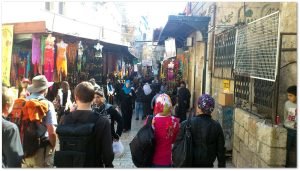
Back in 2103, the guide pointed out the surrounding boutiques from the middle of Via Dolorosa and stated. “Take a look around. These boutiques were present during the time when Jesus carried the cross here. For the merchants and their customers, this procession was merely another entertainment event, nothing more than a fleeting moment.”
Historical Context and Significance:
The history of the Via Dolorosa dates back centuries. Its roots can be traced to the Byzantine period when Christianity began to flourish in Jerusalem. However, the current route was established during the medieval period. It’s marked by the construction of churches, chapels, and stations along the way. The goal was to create a tangible connection between the faithful and the sacred events of Christ’s passion.
For Christians, the Via Dolorosa is a living testament to the central message of their faith: the redemption of humanity through Christ’s suffering and sacrifice. It’s a journey that encapsulates the essence of Christianity, emphasizing themes of forgiveness, compassion, and the transformative power of love.
A Detailed Journey Through the Stations:
Station 1: Condemnation
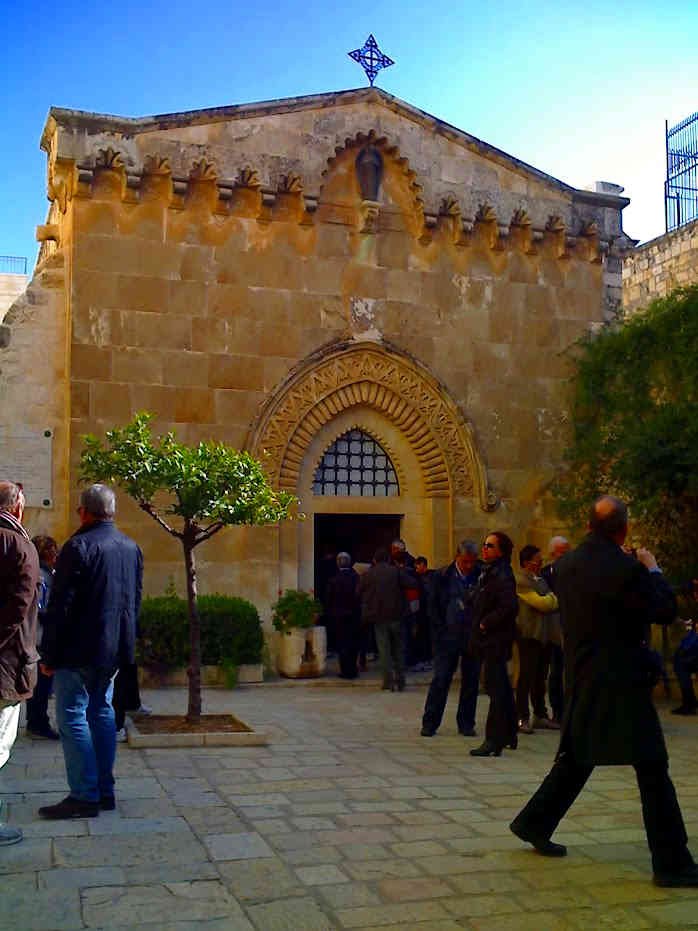
Step into the Antonia Fortress courtyard, where Pontius Pilate, the Roman governor, ordered the flagellation and then condemned Jesus to death. Picture the solemnity of this moment as Pilate made his fateful decision, marking the beginning of Jesus’ arduous path.
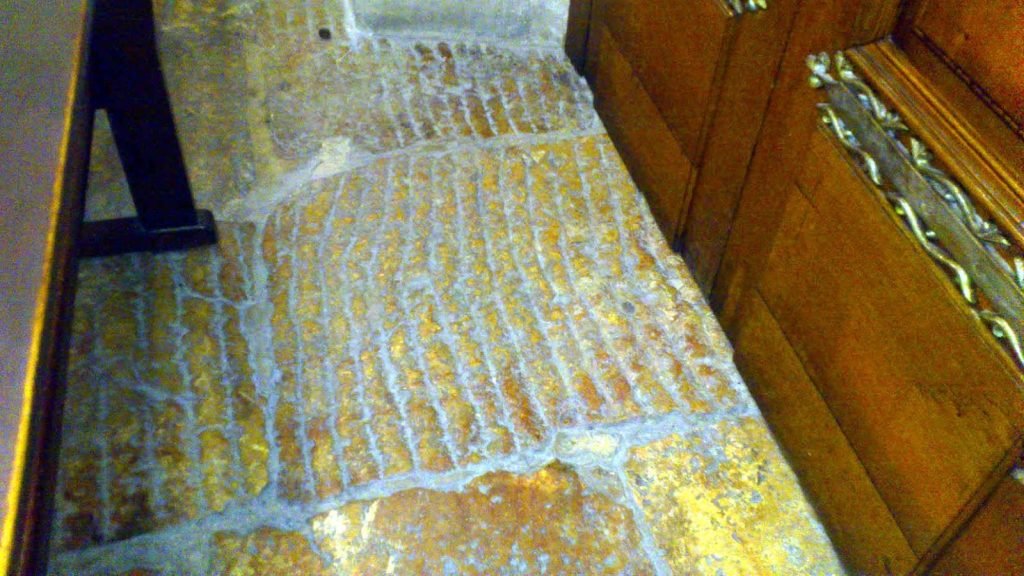
Condemnation Church. The floor presereved from the Jesus times.
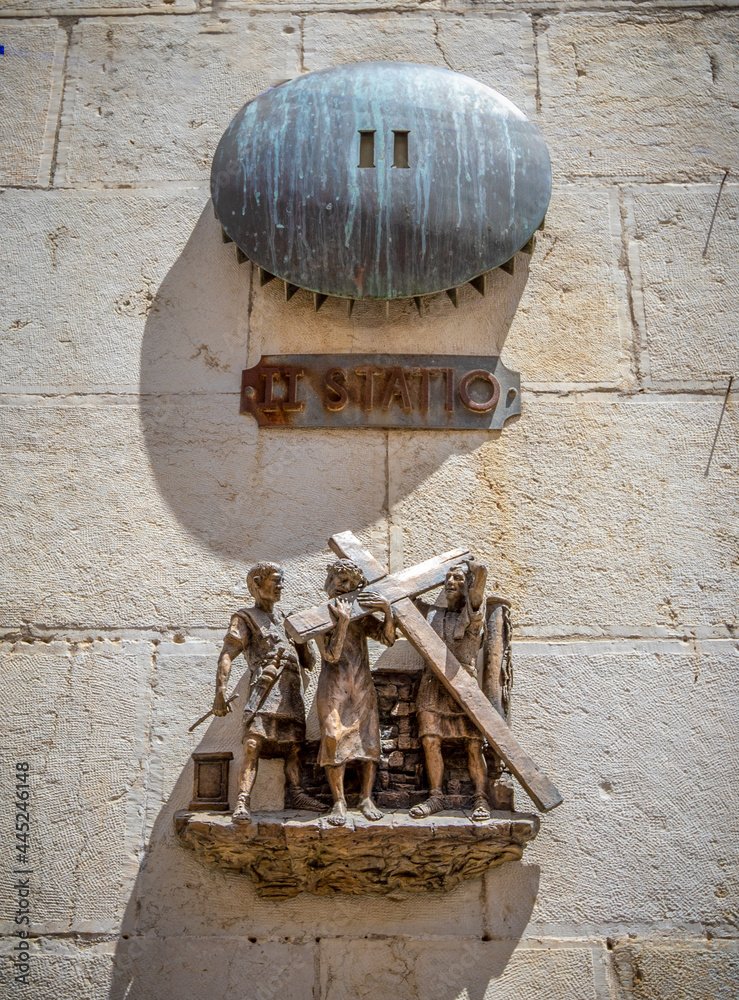
Station 2: Carrying the Cross
Witness the weight of the wooden cross as Jesus shoulders it, an embodiment of His acceptance of the burden of humanity’s sins. The crowd watches in a mix of awe and dread.
Jesus takes His cross.
Station 3: The First Fall
Imagine the shock and sorrow as Jesus stumbles under the cross’s immense weight. It’s a poignant reminder of the human frailty hidden within divine strength.
Station 4: Meeting His Mother
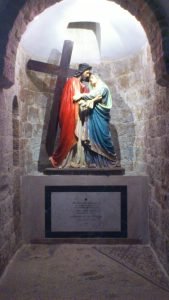
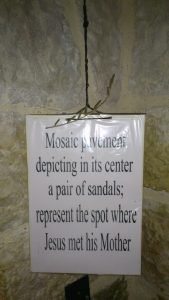
In this station, the encounter between Jesus and Mary is a heart-wrenching moment. Mary, overwhelmed with sorrow, reaches out to her beloved son, offering silent support amidst the chaos. This station has resided on the Armenian Catholic Patriarchate soil.
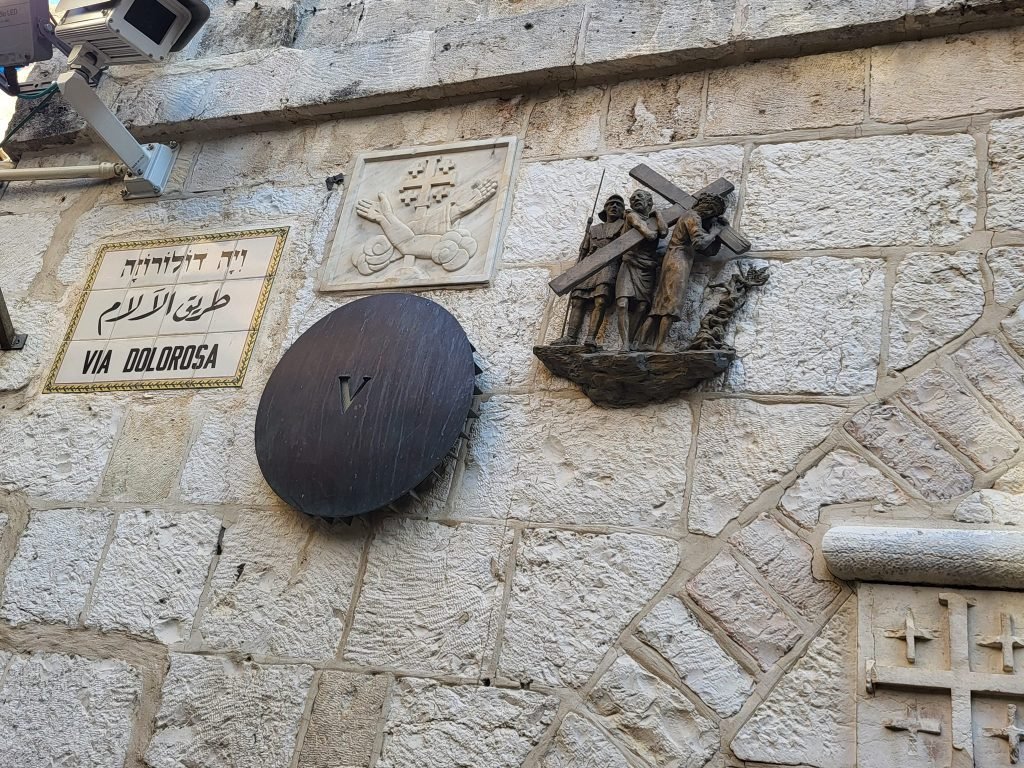
Station 5: Simon of Cyrene’s Help
The Romans ordered Simon of Cyrene to help carry His cross.
Experience the kindness of Simon of Cyrene, a stranger compelled to assist Jesus in carrying the cross. His act represents the unexpected allies we may encounter in times of struggle.
Station 6: Veronica’s Compassion
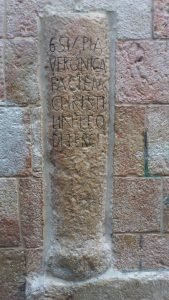
As Veronica wipes Jesus’ sweat and blood-stained face with her veil, her compassionate act of mercy resonates with the theme of selflessness and kindness amid adversity.
The image of Jesus’s face later miraculously appeared on the veil.
Station 7: The Second Fall
Once more, Jesus stumbles, emphasizing the physical and emotional toll of His journey, a testament to His unwavering dedication to His mission.
Station 8: Women of Jerusalem
As Jesus meets the women of Jerusalem, their wailing and mourning echo through the streets. Jesus turning to them said, “Daughters of Jerusalem, do not weep for me, but weep for yourselves and for your children”.
Their compassion reflects the universal bond of empathy.
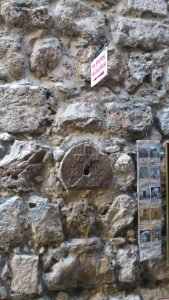
Station 9: The Third Fall
Jesus falls again, symbolizing His unyielding commitment, even in the face of extreme suffering.
“I am exhausted by sorrow, and weeping has shortened my life. I am weak from all my troubles; even my bones are wasting away. All my enemies, and especially my neighbours, treat me with contempt; those who know me are afraid of me; when they see me in the street, they run away.” (Psalm 31:10-11)
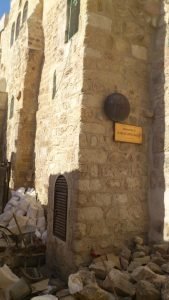
Station 10: Stripped of His Garments
Coming into the main square of the Basilica of the Holy Sepulchre, on our right we find the steps leading up to the small Franciscan chapel where Jesus was stripped of his clothes.
Picture the humiliation as Jesus is stripped of His garments, a stark symbol of vulnerability, highlighting the depths of His sacrifice.
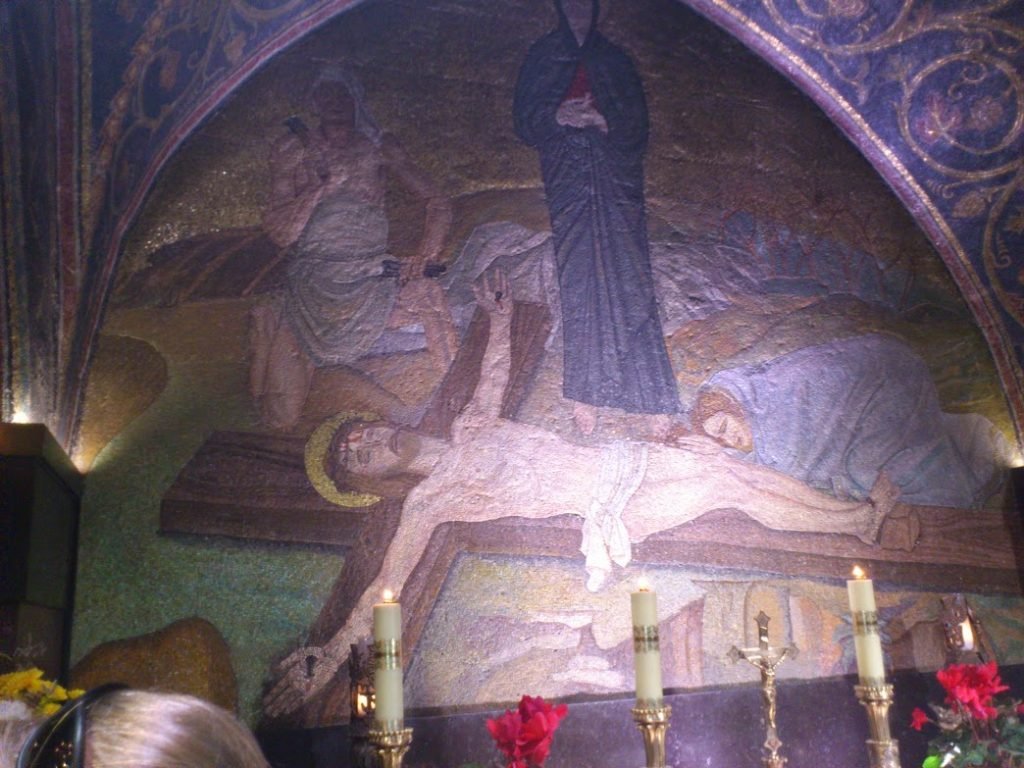
Station 11: Nailed to the Cross
At this station, we confront the crucifixion—the ultimate sacrifice. The hammering of nails and the cries of anguish become a solemn symphony of redemption.
Station 12: The Final Moments. Golgotha
Jesus’s final moments are marked by agony, love, and forgiveness. It’s a profound reflection on the transformative power of unconditional love.
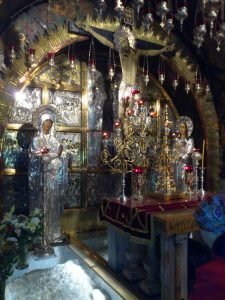
Station 13: Taken Down from the Cross
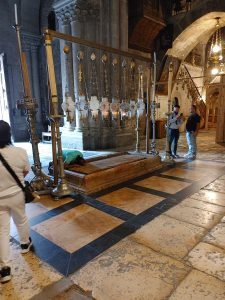
The lifeless body of Jesus is gently lowered from the cross, a reminder of the fragility of life and the eternal hope that springs from sacrifice.
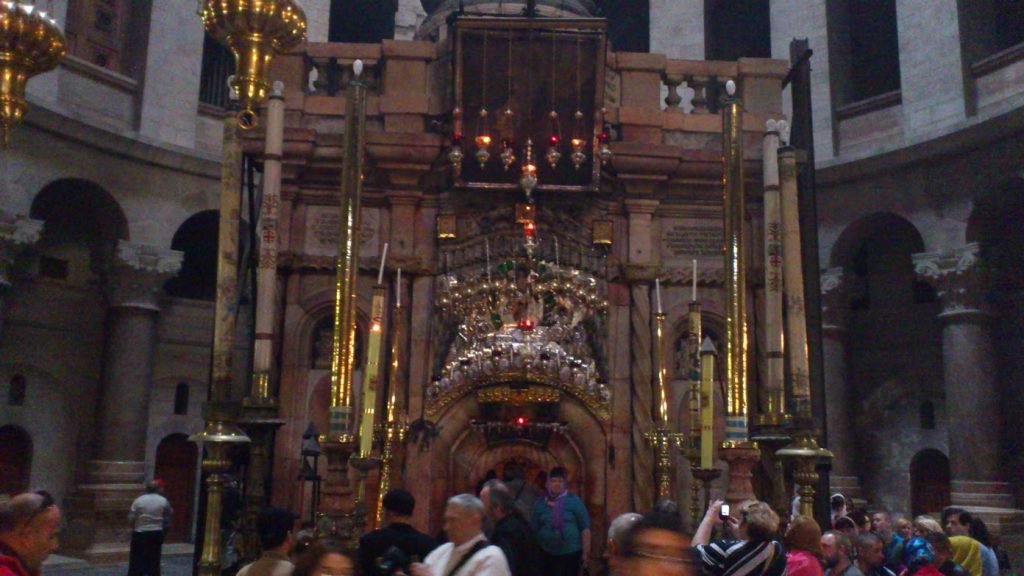
Station 14: Laid in the Tomb
The journey concludes as Jesus is laid to rest in the tomb, a poignant moment of anticipation, symbolizing the promise of resurrection and eternal life.
Walking the Via Dolorosa is an emotional and spiritual pilgrimage, a journey that invites Christians to not only reflect on the events of Christ’s crucifixion but also to contemplate the enduring message of hope, redemption, and unwavering love that remains at the core of their faith. It is a path to understanding the very heart of Christianity and a testament to the enduring power of faith and compassion.
What to read about:
“The Via Dolorosa: Walking the Way of Sorrows” by the Franciscan Media – This book provides a detailed exploration of each station along the Via Dolorosa and offers insights into the spiritual and historical significance of this pilgrimage route.
“Jerusalem: The Biography” by Simon Sebag Montefiore – While not solely focused on the Via Dolorosa, this comprehensive book on the history of Jerusalem provides valuable context for understanding the city’s role in Christian history and the significance of the Via Dolorosa.
“The Passion Narratives in the Four Gospels” by William L. Lane – This scholarly work delves into the biblical accounts of Jesus’ passion, including the events that took place along the Via Dolorosa.
“The Stations of the Cross: A Devotional Guide for Lent and Holy Week” by Adam Hamilton – This book offers a devotional perspective on the Stations of the Cross, making it an excellent choice for those looking to deepen their spiritual understanding.
Websites and Online Resources:
- The Via Dolorosa Tour: See all 14 Stations of Christ’s Path to the Cross, Holy Sepulchre Church – Pastor Mike leads a virtual tour: Holy Land Pilgrimage – Via Dolorosa
- Bible Gateway – For those interested in exploring the biblical passages related to the events along the Via Dolorosa, Bible Gateway provides an online Bible with various translations and search functions: Bible Gateway
- The Via Dolorosa – Sorrowful Way – The article in Wikipedia
Documentary Films:
- “The Holy Land: Jerusalem’s Via Dolorosa” – This documentary takes viewers on a virtual pilgrimage along the Via Dolorosa, exploring its historical and religious significance.
- “Jerusalem” (2013) – While not exclusively focused on the Via Dolorosa, this IMAX documentary offers breathtaking visuals and provides insight into the cultural and religious diversity of Jerusalem.
Leave a Reply